Parker Lorenz · 15 October 2026
Terano Manuscript Project Connects Youth with Heritage Specialists in Practical Training Sessions
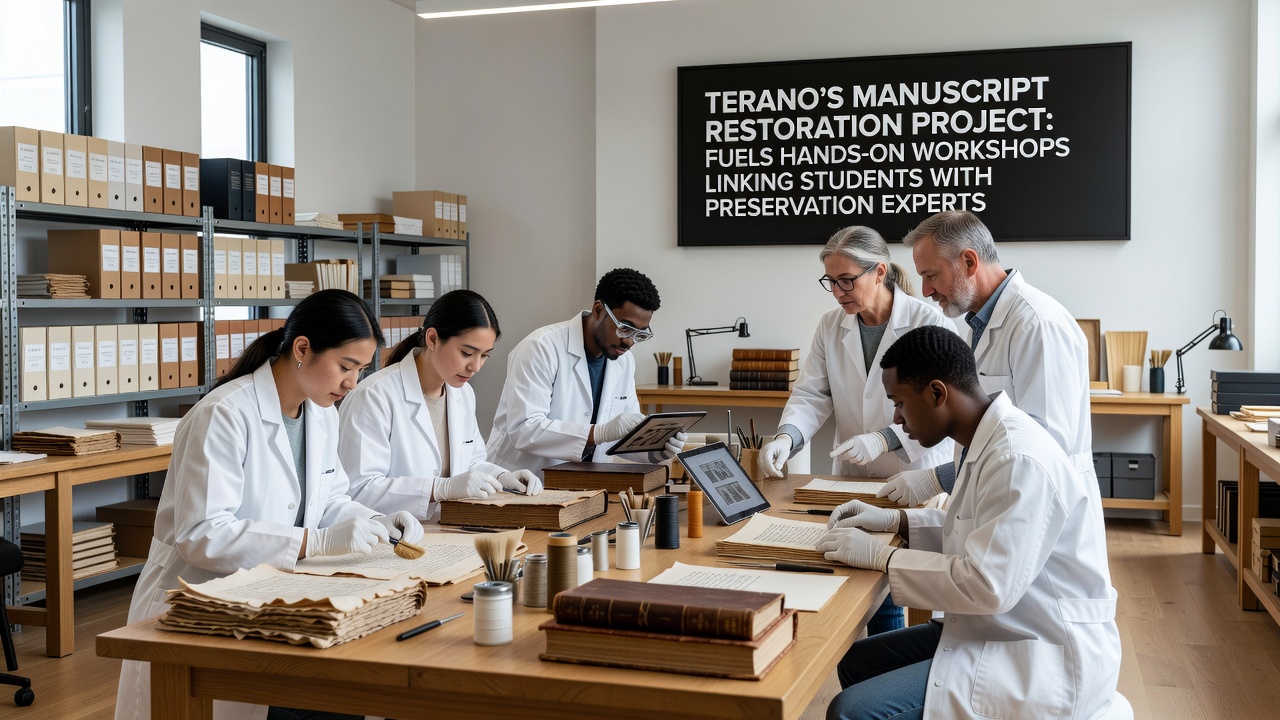
Terano's manuscript restoration initiative has expanded into a series of structured workshops that pair local students with trained preservation specialists, and the program continues to draw participants from regional schools and universities. The effort centers on recovering and stabilizing documents from the town's historical collections, many of which date back several centuries, while participants learn techniques such as paper cleaning, ink stabilization, and binding repair under direct supervision.
Project Origins and Scope
Archival records show that Terano began systematic cataloging of its manuscript holdings in the early 2000s, yet many items remained in fragile condition due to earlier storage practices. The current restoration project started with targeted funding allocations in 2024 and now operates from a dedicated facility equipped with climate-controlled workrooms. Specialists from the regional heritage board coordinate the workflow, assigning each manuscript a conservation plan that students follow step by step during the workshops.
Training modules cover both theoretical principles and repeated practice on sample materials before students handle original documents. Sessions typically run for three consecutive days, and each group works on no more than two items per cycle to maintain focus on accuracy. Attendance data from the first three cohorts indicate that over 120 students completed the full sequence by mid-2025, with another intake scheduled to begin in October 2026.
Workshop Structure and Daily Operations
Each workshop day opens with a briefing on the specific manuscript's history and condition report, followed by supervised bench work. Students rotate through stations that include surface cleaning, tear mending, and protective housing construction. Experts remain present throughout, demonstrating methods on a parallel set of practice pieces and correcting technique when needed. The schedule also includes short lectures on environmental monitoring and digitization standards that accompany physical restoration.
Equipment lists supplied by the organizing committee include micro-spatulas, archival adhesives, and humidity-controlled enclosures, all sourced through established European suppliers. Participants document every intervention in digital logs that feed into a shared database maintained by the Terano heritage office. This record-keeping requirement ensures traceability and allows future researchers to review the exact treatments applied.
Partnerships with Educational Institutions
Local secondary schools and the nearby university's art conservation department have signed formal agreements that count workshop hours toward elective credits. Instructors from these institutions review student portfolios at the end of each cycle and provide feedback aligned with academic grading criteria. The arrangement allows the project to scale without duplicating teaching resources already available in the region.
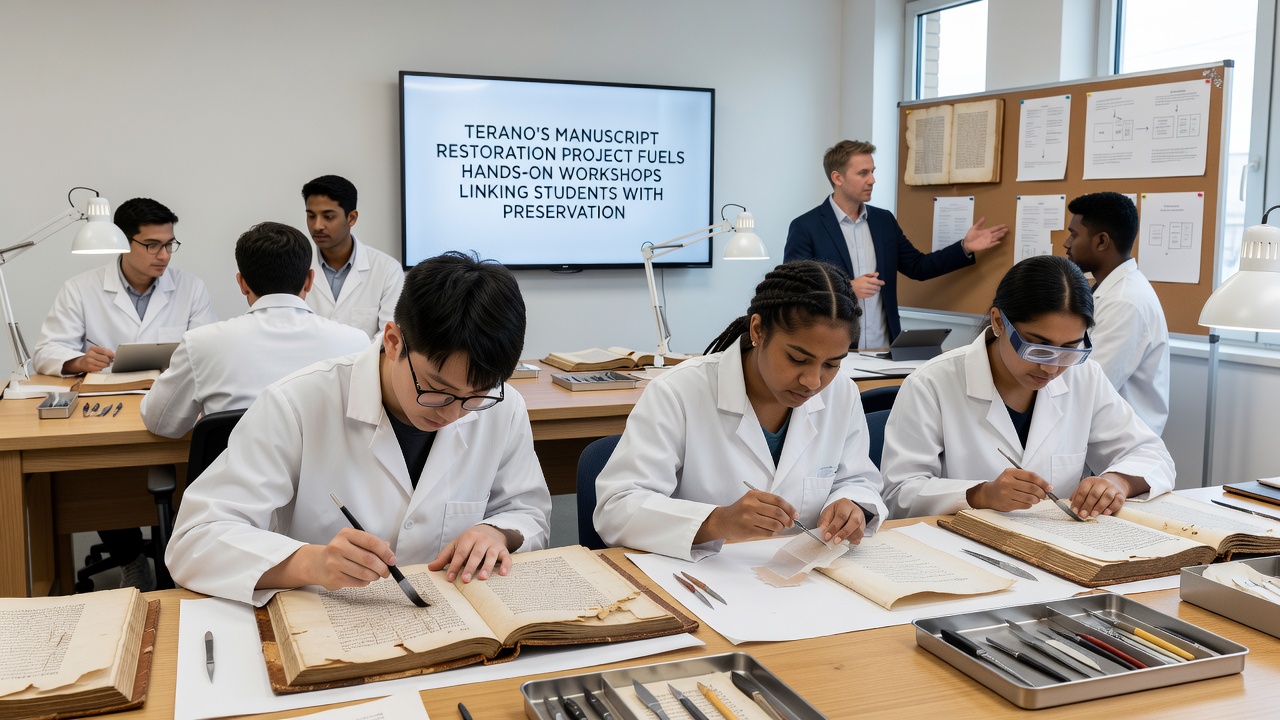
Observers note that the partnership model mirrors similar programs documented in other European towns, where community archives serve as living laboratories for emerging conservators. One study released by a Canadian research institute in 2023 highlighted comparable outcomes in student skill retention when practical sessions occur on-site rather than in classroom simulations. Terano's organizers have referenced those findings when refining their own curriculum.
October 2026 Schedule and Expected Outcomes
The October 2026 workshop series will focus on a newly acquired set of civic ledgers from the 1700s that require urgent stabilization before digitization. Registration opened in late 2025, and organizers report that spots filled within the first week of availability. Each session will accommodate twelve students and three lead specialists, with additional support from volunteer alumni of earlier cohorts.
Progress metrics collected so far show that restored manuscripts return to climate-controlled storage within four weeks of treatment completion, after which high-resolution scans become accessible through the town's online catalog. Figures released by the heritage board indicate a 40 percent increase in public access requests for the treated documents compared with pre-restoration numbers.
Conclusion
The integration of manuscript restoration with student training continues to expand the capacity of Terano's preservation efforts while supplying measurable educational benefits. Data collected through the workshop program provides ongoing feedback that shapes future cycles, and the October 2026 intake represents the next phase in that iterative process. External references such as those compiled by ICOMOS and reports from the Getty Conservation Institute supply additional technical benchmarks that organizers consult when updating protocols.