Parker Lorenz · 17 September 2026
Where Terano's Students, Archaeologists, and Artists Converge to Redefine Local Narratives
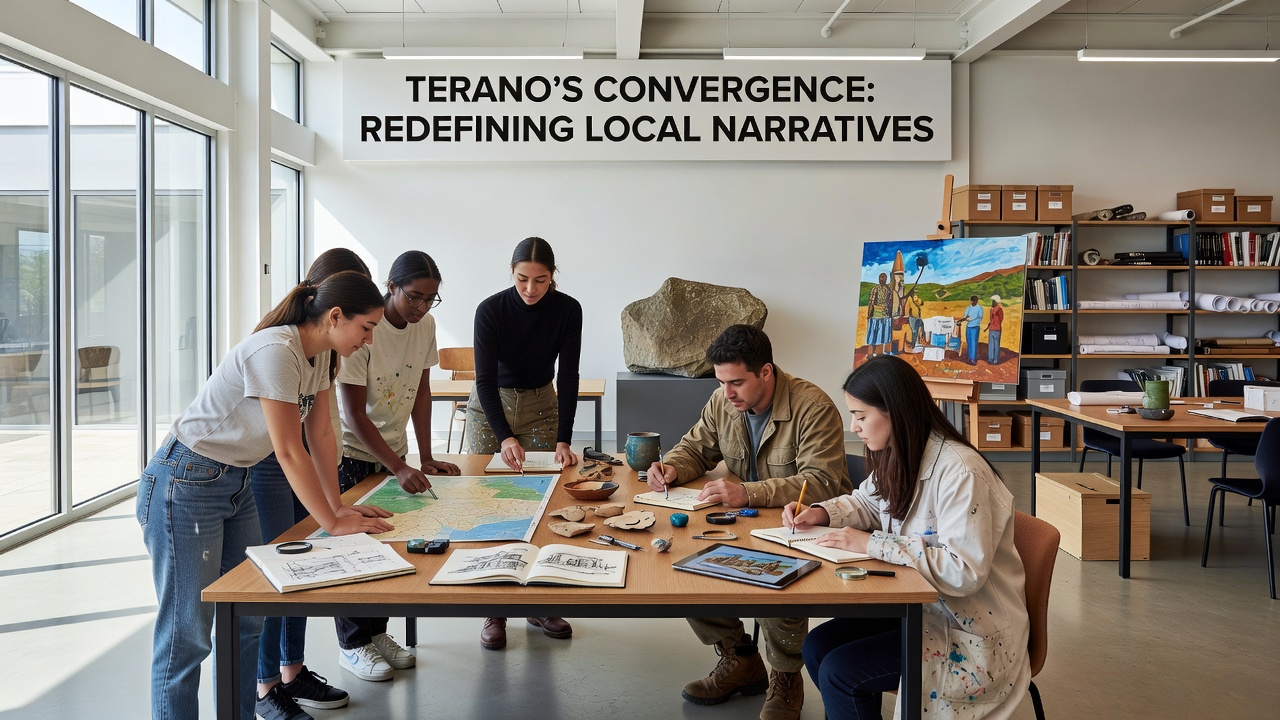
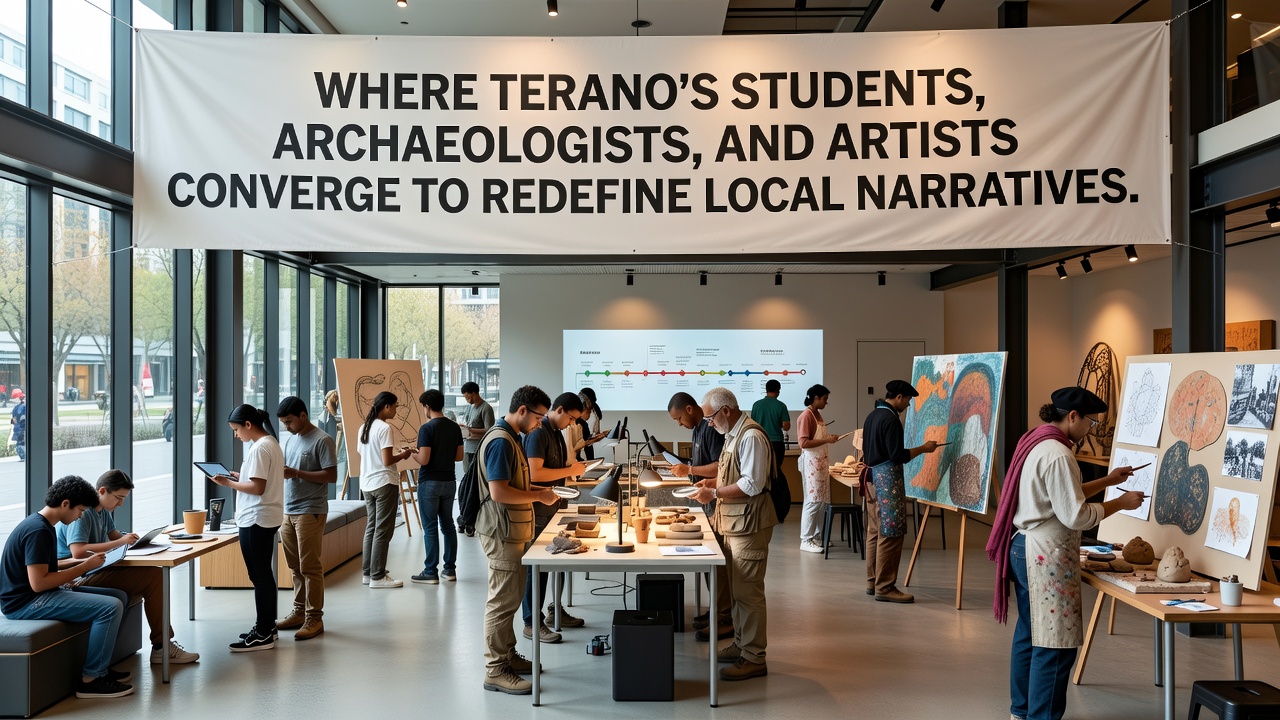
Terano hosts a dedicated convergence space where university students, field archaeologists, and practicing artists meet regularly to examine material remains and oral histories that shape the town's identity, and this collaboration has produced joint projects that blend excavation data with visual interpretations. The facility occupies a renovated 19th-century warehouse near the old river port, and it provides shared labs, exhibition areas, and digital recording studios that allow teams to work side by side on the same finds and stories.
Archaeologists from the regional heritage office supply primary data from ongoing digs along the ancient trade paths that once connected Terano to coastal settlements, while students from the local university's anthropology and history departments process the artifacts through 3D modeling software. Artists then translate stratigraphic layers and ceramic typologies into site-specific installations that residents and visitors can view in rotating gallery shows, and these works incorporate fragments of original pottery alongside contemporary mixed-media pieces.
Shared Projects and Methods
One ongoing initiative focuses on the medieval market district where stratigraphic evidence reveals successive phases of use, and student teams document each layer with photogrammetry before artists create large-scale drawings that overlay current street plans onto the recovered ground plans. The resulting panels travel to schools and community centers, which gives residents direct access to the reinterpretation process without requiring specialized training. Data from these surveys feed into an open-access database maintained by the university, and artists reference the same records when they prepare new pieces for the annual exhibition cycle.
Workshops run throughout the year and combine practical training with discussion sessions, so archaeologists demonstrate conservation techniques while artists introduce methods for embedding narrative elements into fragile materials. Students rotate through both stations, which builds a cohort familiar with both technical standards and interpretive approaches. Records from the 2024–2025 season show that more than 120 participants completed at least one full workshop cycle, and several of those projects now form the core of the town's updated heritage trail signage.
Upcoming Developments in 2026
Planning documents released by the regional cultural authority indicate that a new phase of fieldwork will begin in September 2026 along the eastern embankment, and this campaign will include expanded student placements plus dedicated artist residencies funded through a partnership with the university. The schedule allocates six weeks for excavation, followed immediately by a two-week interpretation lab where artists and archaeologists co-author explanatory texts for the finds. Public opening events are listed for late October 2026, which aligns with the town's annual heritage festival and allows the new narratives to reach a wider audience.
Digital outputs from previous seasons, including laser scans and stratigraphic animations, will be integrated into an augmented-reality application that the university's computer science department is developing, and artists contribute the visual assets that appear when users point devices at specific locations. The application is scheduled for beta release in early 2026, and testing groups drawn from the same student-artist-archaeologist pool have already reviewed the interface for accuracy and clarity.
Local Impact and Record Keeping
Municipal archives now store both excavation reports and exhibition catalogues in a single catalogued collection, which simplifies cross-referencing between raw data and interpretive works. Community feedback sessions held after each exhibition cycle record attendance figures and comments, and these notes guide adjustments to future displays. Figures released by the regional tourism board show a measurable increase in visits to the heritage trail during months when new installations appear, though the precise contribution of each element remains under review by independent evaluators.
Training materials developed through the convergence space have been adopted by two neighboring municipalities, and instructors from Terano travel to deliver the same workshop sequence on request. The pattern of collaboration therefore extends beyond the original site while remaining anchored in Terano's documented material record and community input.
Conclusion
The convergence space continues to operate as a fixed point where excavation results, academic processing, and artistic translation occur in sequence, and the resulting outputs feed both public education programs and updated municipal heritage records. Documentation from each season remains available through the university database, which supports ongoing verification and further reinterpretation as new evidence emerges.